The short version
- You can check anytime, but checking at the same times each day gives fair numbers.
- For most people, the best time to check blood pressure is morning and evening.
- In the morning, check before breakfast, coffee, and your medicine.
- Take two readings, one minute apart, each time.
- Before a visit, check for 7 days if you can, and at least 3.
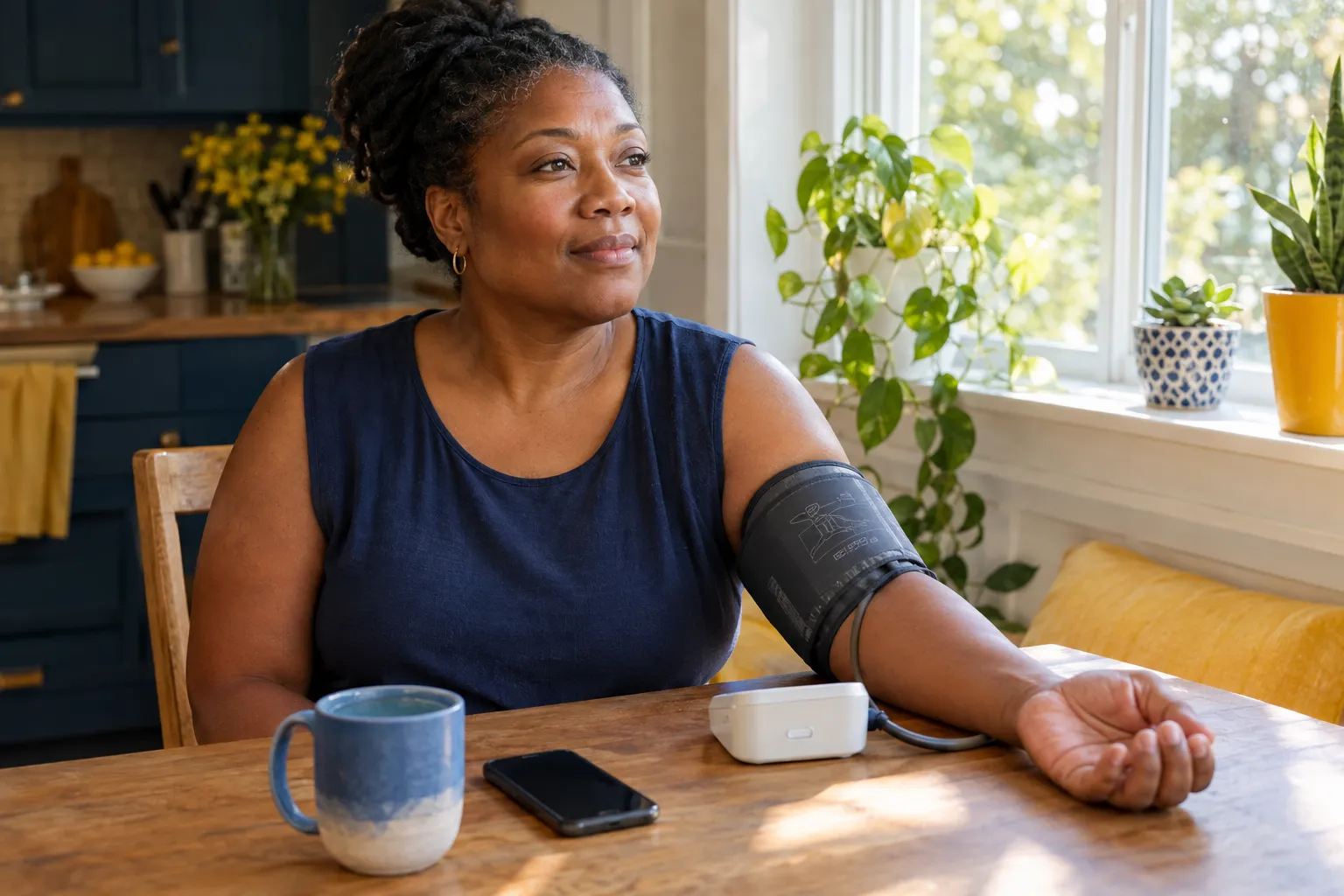
Can you check your blood pressure anytime?
Yes. You can check it any time you want to, or any time you feel unwell. But a reading taken at a random moment is hard to compare with the next one.
Blood pressure changes all day long. It tends to be highest in the morning, drops during the day, and is lowest at night (American Heart Association). It also goes up with stress, pain, cold, a big meal, or rushing.
That is why the time you choose matters. Checking at the same times each day lets you compare fair numbers and see your real pattern (American Heart Association).
What is the best time to check blood pressure?
For most people, the best times are morning and evening, at about the same times every day (AHA blood pressure log).
| Time | When exactly | Why |
|---|---|---|
| Morning | After you use the bathroom, before breakfast, coffee, and your medicines | Shows your numbers before food, caffeine, or a new dose changes them |
| Evening | Before supper or at bedtime | Shows how your numbers hold up later in the day |
The American Heart Association suggests the evening check before supper in one guide and at bedtime in another (AHA news; AHA log). Either is fine. Pick the one you can stick with, and ask your care team if they prefer one.
Tie each check to something you already do, like brushing your teeth in the morning and getting ready for bed at night.
How many readings should I take each time?
Take two readings, one minute apart, each time you check. Write down both numbers (AHA blood pressure log). Your care team may use the average.
If the two readings are very different, wait a minute and take a third. One odd number does not tell the whole story.
How many days should I check?
Before a doctor visit, check morning and evening for 7 days if you can, and at least 3 days (AHA and AMA joint statement). That gives your care team enough readings to see a real pattern (American Medical Association).
Your care team may ask you to check more often:
- When you are first diagnosed
- After a medicine change (2025 guideline review)
- In the week before your next appointment (AHA blood pressure log)
When your numbers are stable, you may not need to check every day. Ask your care team how often is right for you.
Should I check before or after my blood pressure medicine?
For the morning check, measure before you take your blood pressure medicine, unless your care team tells you otherwise (AHA blood pressure log). This shows how well your medicine is lasting until your next dose.
Don't skip, delay, or change a dose because of a home reading. Talk to your care team first. Here is why your medicine matters even when you feel fine.
When is a bad time to check?
Some moments make your number look higher than it really is. Wait at least 30 minutes after:
- Coffee, tea, or other caffeine
- Smoking or vaping
- Exercise
- A big meal (MedlinePlus)
Also wait until you feel calm if you are upset or rushing. Empty your bladder first, then sit quietly for 5 minutes. For the full step-by-step checklist, see how to take an accurate reading at home.
What if I feel unwell between my usual checks?
You can check anytime you have symptoms like a headache, dizziness, or feeling "off." Sit and rest for 5 minutes first, then take two readings. Write down the time and how you felt.
If your reading is higher than 180/120, wait one minute and check again. If it is still that high and you have chest pain, shortness of breath, back pain, numbness or weakness, a change in vision, or trouble speaking, call 911. See when to call 911.
How do I keep track of my readings?
Your care team needs more than the numbers. They need to know when you took each one. A morning reading and a bedtime reading can be very different, and both are normal.
You can use a paper log or a monitor that saves readings. The Bee Health Companion app can help you stay on schedule:
- Reminders: set private reminders for your morning and evening check times. They run on your phone.
- Date and time: every reading is saved with its date and time.
- Trends: see your latest reading and 14-day summaries without doing the math.
- Visit report: bring a 30-day report with your full reading log, averages, and how each reading was taken.
For what to bring and ask, see how to prepare for your next appointment. If your numbers are new to you, start with what the two numbers mean.
The bottom line
You can check your blood pressure anytime, but your numbers are most useful when you check at the same times each day. For most people, that means two readings in the morning before medicine and food, and two in the evening. Do this for about a week before your visit, and share the results with your care team.
Sources
- American Heart Association: My Blood Pressure Log
- American Heart Association and American Medical Association: Self-Measured Blood Pressure Monitoring at Home (Joint Policy Statement)
- American Heart Association News: Monitoring blood pressure at home can be tricky
- American Heart Association News: Blood pressure measurements in the clinic may vary widely
- American Heart Association: Home Blood Pressure Monitoring
- Current Hypertension Reports: Updates in the 2025 AHA/ACC Hypertension Guideline
- American Medical Association: What doctors want patients to know about home BP measurement
- MedlinePlus: Blood pressure measurement
- American Heart Association/American College of Cardiology: 2025 High Blood Pressure Guideline
Sources checked October 26, 2026.
This guide is for education only. It does not replace advice from your healthcare professional.