The short version
- Aim for no more than 2,300 mg of sodium a day, ideally 1,500 mg.
- Most sodium comes from packaged and restaurant food, not the saltshaker.
- The DASH eating pattern can lower the top number by about 5 to 8 points.
- On a label, 5% Daily Value or less is low and 20% or more is high.
- Ask your care team before adding a lot of potassium or salt substitutes.
What is the best diet for high blood pressure?
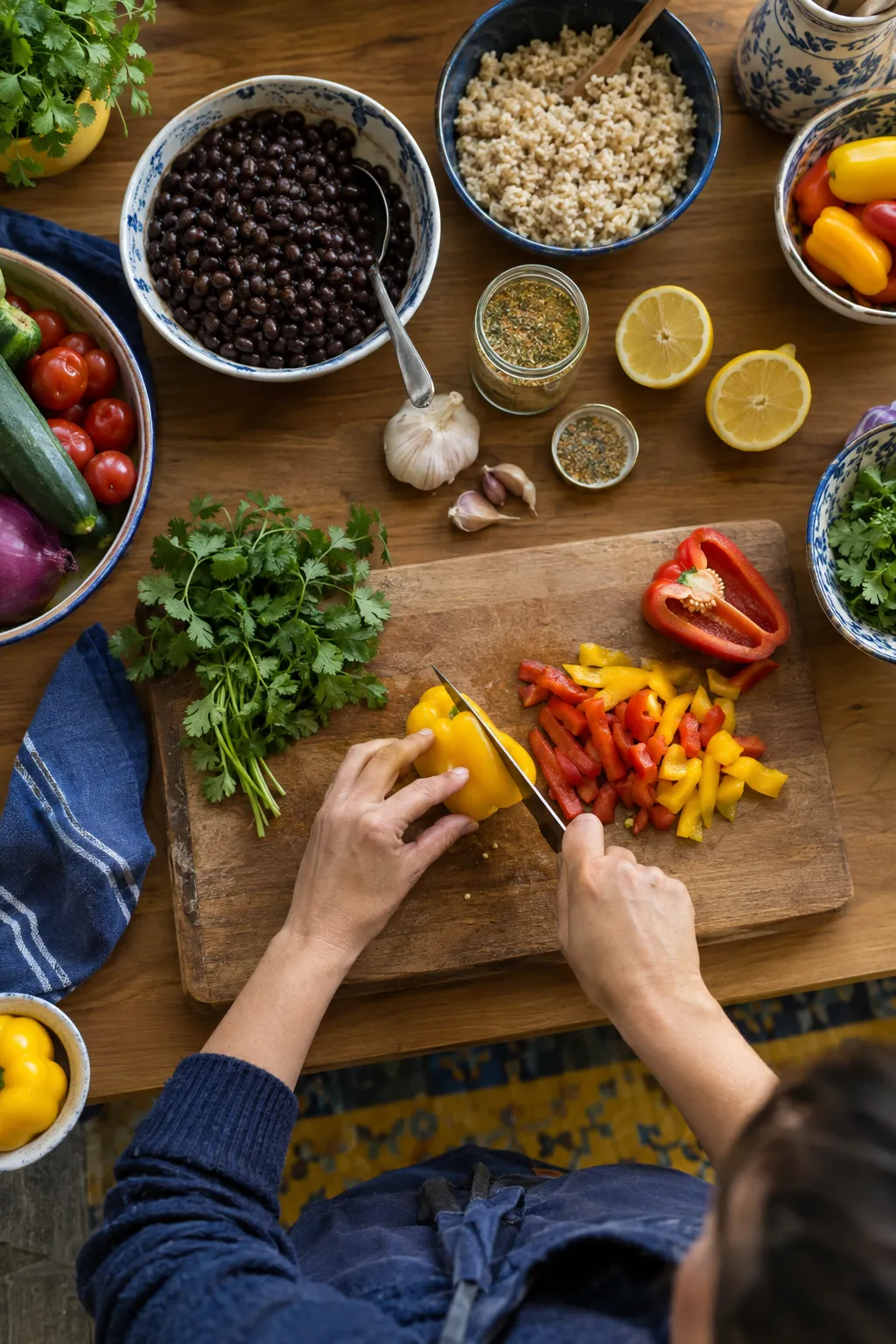
The best diet for high blood pressure is not a fad or a set of special foods. It is a pattern: more vegetables, fruits, whole grains, beans, nuts, and low-fat dairy, with less sodium, sugar, and fatty meat. The best-tested version of this pattern is called DASH, short for Dietary Approaches to Stop Hypertension (NHLBI).
Sodium is the other big piece. The American Heart Association (AHA) says to aim for no more than 2,300 mg a day, with an ideal goal of 1,500 mg a day for most adults. More than 70% of the sodium Americans eat comes from packaged, prepared, and restaurant foods, not the saltshaker (AHA).
You do not have to be perfect. The AHA notes that cutting back by even 1,000 mg a day can improve blood pressure for most people (AHA). Your care team may give you a different goal. If so, follow theirs.
Start here
- Lower-sodium food that still tastes like food: for anyone who wants easy swaps and a quick way to read a label.
- What to eat on the DASH diet: for people ready for a food list, serving sizes, a sample day, and a grocery list.
- Is salt the only cause of high blood pressure?: for anyone who already eats less salt and wonders what else matters.
- Exercise and blood pressure: for pairing better food with more activity, since the two work well together.
How much can eating better lower blood pressure?
Food changes are not a quick fix, but they can make a real difference. The 2025 AHA/ACC high blood pressure guideline lists the average drop in the top number (systolic) for people with high blood pressure (Hypertension journal):
| Food change | Goal | Average drop in the top number |
|---|---|---|
| Eat the DASH way | Lots of fruits, vegetables, whole grains, and low-fat dairy | 5 to 8 points |
| Eat less sodium | Under 2,300 mg a day, ideally under 1,500 mg | 6 to 8 points |
| Eat more potassium | 3,500 to 5,000 mg a day, mostly from food | About 6 points |
| Drink less alcohol | None is best; if you drink, cut back by more than half | 4 to 6 points |
These are averages from studies of different groups. Your results may be bigger or smaller.
Changes can also show up fast. In the first DASH study, people with high blood pressure who ate the DASH way saw their top number fall by about 11 points more than people on a typical American diet (Appel and others, NEJM). Their blood pressure began to drop within two weeks (Conlin and others, American Journal of Hypertension). A later study found that DASH plus less sodium worked better than either one alone (NHLBI).
What does a DASH plate look like?
Think of DASH as "more of these, less of those." The NHLBI describes it this way (NHLBI):
- Eat more: vegetables, fruits, whole grains, low-fat or fat-free dairy, fish, poultry, beans, nuts, and vegetable oils.
- Eat less: fatty meats, full-fat dairy, coconut and palm oils, sugary drinks, and sweets.
- Keep sodium low: the plan works at 2,300 mg a day, and 1,500 mg lowers blood pressure even more.
A simple start is to fill half your plate with vegetables and fruit. Add a whole grain like brown rice or oats, and a lean protein like beans, fish, or chicken. For serving sizes and a full sample day, see what to eat on the DASH diet.
What about potassium?
Potassium is a mineral that helps your body get rid of sodium. Good food sources include potatoes, spinach, tomatoes, broccoli, bananas, oranges, beans, lentils, nuts, milk, yogurt, and fish (NIH Office of Dietary Supplements). Most people can get more potassium from food alone. But more is not safe for everyone. See the safety note below.
What about alcohol?
The 2025 guideline says not drinking is best for health. If you do drink, it suggests no more than 2 drinks a day for men and 1 for women (Hypertension journal). Ask your care team what fits you, especially if you take medicine.
How do I read a food label for sodium?
You do not need to count every milligram. A few seconds with the Nutrition Facts label can steer you to better choices.
- Find Sodium on the label. It is listed in milligrams (mg) per serving.
- Check the serving size. If you eat two servings, you get twice the sodium.
- Look at the % Daily Value (% DV). This shows how much one serving adds to a full day. The FDA says 5% DV or less is low, and 20% DV or more is high (FDA).
- Compare two brands of the same food, like bread, soup, or pasta sauce. Pick the one with less.
Words on the front of the box can fool you. "Reduced sodium" only means less than the regular version, which may still be very salty. The number on the back tells the truth.
Try this today
Pick one food you eat almost every day, such as bread, soup, or a sauce. At your next store trip, compare two brands and choose the one with the lower % DV for sodium.
- Check the sodium on three foods in your kitchen.
- Add one vegetable or fruit to your next meal.
- Season one dish with lemon, garlic, herbs, or a salt-free spice blend.
- Ask for sauce or dressing on the side when you eat out.
- Write down your home readings so you can see if changes help.
DASH and more potassium are safe for most people, but not everyone. Talk to your care team before you eat a lot more potassium or use a salt substitute if you have kidney disease or take medicines that can raise potassium. These include some blood pressure medicines, such as ACE inhibitors, ARBs, and potassium-sparing "water pills." Many salt substitutes are made with potassium (NIH Office of Dietary Supplements). If you take diabetes medicine, ask before making big changes to what you eat. Keep taking your medicines as prescribed. Do not stop or change a dose on your own, even if your numbers improve.
Call 911 if your blood pressure is higher than 180/120 and you have chest pain, shortness of breath, back pain, numbness or weakness, a change in vision, or trouble speaking. Learn more in when to call 911.
How Bee can help
- Use guided readings to take a good reading at home and save it, so you can see whether food changes are helping.
- Check your 14-day summaries and trends after you start a new habit, like eating less sodium.
- Pick a Healthy Habits plan that fits, choose your schedule, and track your progress in 7-day cycles.
- Bring a 30-day report to your next visit so your care team can see your readings and habit progress. See the Bee Health Companion app.
Common questions
Can diet alone lower high blood pressure?
For some people, food changes lower blood pressure a lot, and many people need both healthy habits and medicine. Your care team can tell you what you need. Do not stop or change a medicine on your own.
How fast can a diet lower blood pressure?
In the first DASH study, blood pressure began to drop within two weeks (Conlin and others, American Journal of Hypertension). Give any change two to four weeks and track your home readings to see how it works for you.
Do I have to give up salt completely?
No. The goal is to stay under 2,300 mg of sodium a day, and closer to 1,500 mg if you can (AHA). Since most sodium comes from packaged and restaurant foods, cutting back there often matters more than the saltshaker.
Is there one food that lowers blood pressure?
No single food does the job. What helps is your overall pattern, like DASH, over weeks and months. Fruits, vegetables, beans, and low-fat dairy all play a part.
Sources
- American Heart Association: How Much Sodium Should I Eat Per Day?
- American Heart Association: Managing Blood Pressure with a Heart-Healthy Diet
- NHLBI: DASH Eating Plan
- NHLBI: DASH Eating Plan Research
- Hypertension: Case-Based Applications of the 2025 AHA/ACC High Blood Pressure Guideline
- American Heart Association/American College of Cardiology: 2025 High Blood Pressure Guideline
- Appel LJ, et al. A clinical trial of the effects of dietary patterns on blood pressure. N Engl J Med. 1997
- Conlin PR, et al. The effect of dietary patterns on blood pressure control in hypertensive patients: results from the DASH trial. Am J Hypertens. 2000
- FDA: The Lows and Highs of Percent Daily Value on the Nutrition Facts Label
- NIH Office of Dietary Supplements: Potassium Fact Sheet for Consumers
Sources checked October 28, 2026.
This guide is for education only. It does not replace advice from your healthcare professional.