The short version
- Check at home morning and evening for 7 days before your visit, and at least 3.
- Bring your readings, a medicine list with doses, and your top questions.
- Home readings show what one office reading cannot.
- Bring a support person, or invite them to a video visit.
- Before you leave, write down the plan and when to come back.
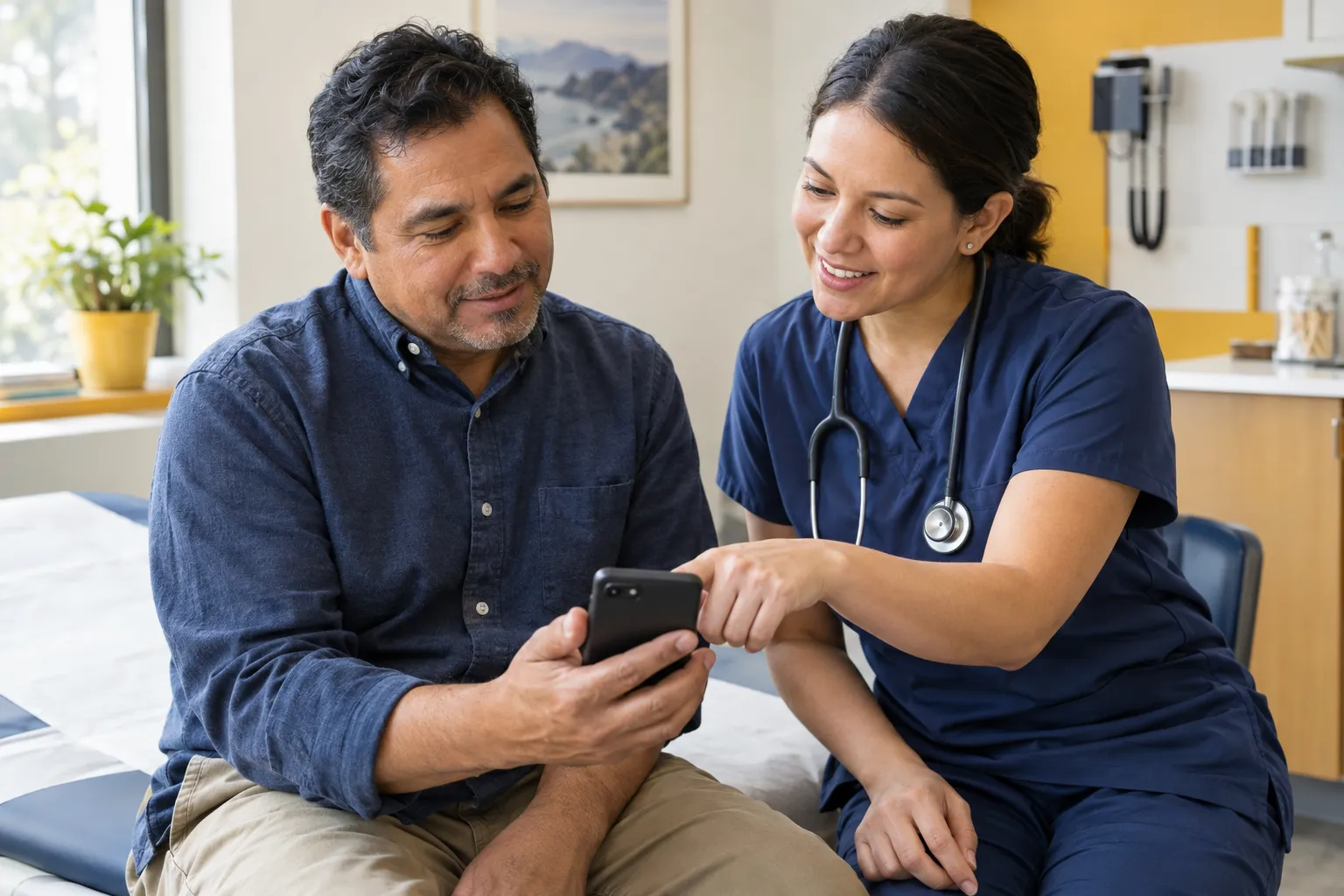
How do I prepare for a doctor appointment for high blood pressure?
Most of the work happens in the week before. Check your blood pressure at home in the morning and evening, two readings each time. Do this for 7 days if you can, and at least 3 (AHA blood pressure log). Bring every reading with its date and time.
Also bring a list of every medicine, vitamin, and supplement you take, with the dose (NIA). Write down your top questions and put the most important one first. Visits are short, so ask it early.
About once a year, bring your home monitor too. Your care team can check that you use it the right way and that it matches their equipment (AHA).
For the full checklist, see how to prepare for your next appointment.
Start here
- How to prepare for your next appointment: the checklist of what to bring and what to ask. Best if your visit is coming up soon.
- How to take an accurate blood pressure reading at home: step-by-step tips, so the numbers you bring are ones your care team can trust.
- Can you check your blood pressure anytime?: when to check and how many days to track before a visit.
- Helping someone you love manage blood pressure: for the family member or friend who comes along.
Why bring home readings if the office checks my blood pressure?
An office reading shows one moment. You may be rushed or nervous, or you may have just walked in. Home readings show many moments in your normal day. Together, they give a fuller picture. For more on your numbers, see My numbers.
That is why the US Preventive Services Task Force (USPSTF) advises checking blood pressure outside the clinic to confirm high blood pressure before treatment starts (USPSTF). The 2025 AHA/ACC high blood pressure guideline also recommends home checks for people who take blood pressure medicine, to help guide dose changes (2025 AHA/ACC guideline).
Home readings can also show two patterns that office readings alone may miss (USPSTF):
| Pattern | At the office | At home |
|---|---|---|
| White coat hypertension | High | Not high |
| Masked hypertension | Not high | High |
If your office and home numbers often look different, bring your log and ask your care team what it means for you.
How often will I have follow-up visits?
It depends on your numbers, your health, and your medicines, so ask your care team. Here is one common case. If your blood pressure is above goal and you start a new medicine or a higher dose, the 2025 guideline advises follow-up about once a month until you reach your goal (2025 AHA/ACC guideline).
Home checks still matter between visits. Once your blood pressure has been steady for several months, checking at home 1 to 3 days a week is probably enough (AHA and AMA). But home checks do not replace regular visits (AHA).
What questions should I ask at a blood pressure visit?
Pick the few that matter most to you. A few to consider (MedlinePlus):
- What do my home readings show since my last visit?
- What should my blood pressure be?
- When should I call you about a reading?
- If I get a new medicine: what is it for, when do I take it, and what side effects should I watch for?
- When should I come back?
It is fine to ask what a word means, like "hypertension," or to ask again when an instruction is not clear (NIA). For more on medicines, see Medication.
What if my visit is by video or phone?
A telehealth visit is a visit by video or phone. The 2025 guideline says phone, video, text, and email contact with your care team can help improve blood pressure control (2025 AHA/ACC guideline).
A little setup helps the visit go smoothly (NIA):
- Charge your phone or tablet the night before.
- Test your camera and sound. A practice call with a friend works well.
- Find a quiet, well-lit spot.
- Keep your questions, home readings, and medicine list next to you.
Should I bring someone with me?
It can help. A family member or friend can remind you of your questions, take notes, and help you remember what was said (NIA). Tell them before the visit what you want to get out of it. You can still ask for time alone with your clinician to talk about private things. The same tips work for a video visit: they can sit beside you.
What should I do after the visit?
Write down the plan before you forget it. Note any changes, when to check at home, and when to come back. It is fine to ask your clinician to write down how and when to take a medicine (NIA). Many clinics also have a visit summary or patient portal you can check later.
If something in the plan does not work for you, call the office. If you want to stop a medicine, check with your clinician first (NIA).
Try this today
Look up the date of your next visit and plan a 7-day reading log for the week before it.
- Write down your next visit date
- Pick a morning and an evening check time for that week
- Make or update your medicine list, with doses
- Write your top three questions, most important first
- Ask someone if they can come with you or join the call
Do not skip, stop, or change a dose before a visit to see what happens to your numbers. If you have questions about your medicine, ask your care team first.
If your reading is higher than 180/120, wait one minute and check again. If it is still that high and you have chest pain, shortness of breath, back pain, numbness, weakness, vision changes, or trouble speaking, call 911. If you have no symptoms, call your healthcare professional right away (AHA). See when to call 911.
How Bee can help
- 30-day report: every reading, averages, ranges, pulse, how each reading was taken, and your active medicines, ready to share at your visit.
- Private reminders: set reminders for readings, medicines, and appointments. They run on your phone, not Bee's servers.
- Guided readings: a step-by-step flow helps you take a good reading and save it.
- Medicine check-ins: confirm each medicine when you take it, so your report shows it.
Bee does not diagnose or change treatment. It helps you bring clear notes to your care team. See the app. It is free on Android now, with iPhone coming soon.
Common questions
What should I bring to a blood pressure appointment?
Bring your home readings with dates and times, a list of your medicines and doses, and your top questions. About once a year, bring your home monitor so it can be checked (AHA).
How many days of readings should I bring?
Aim for 7 days of readings, and at least 3. Take two readings in the morning and two in the evening (AHA and AMA).
Should I take my blood pressure medicine before my appointment?
Keep taking it as prescribed unless your care team has told you something different. If you are not sure, call the office before your visit.
What should I avoid before a blood pressure check?
For 30 minutes before a reading, do not smoke, have caffeine, or exercise. Empty your bladder, then sit quietly for 5 minutes (AHA). Arriving a few minutes early can give you time to settle before the office check.
Sources
- American Heart Association: Home Blood Pressure Monitoring
- American Heart Association: My Blood Pressure Log
- American Heart Association and American Medical Association: Self-Measured Blood Pressure Monitoring at Home (Joint Policy Statement)
- US Preventive Services Task Force: Hypertension in Adults: Screening
- AHA/ACC and partners: 2025 Guideline for the Prevention, Detection, Evaluation and Management of High Blood Pressure in Adults
- National Institute on Aging: How to Prepare for a Doctor's Appointment
- National Institute on Aging: Telehealth: What Is It, How to Prepare, Is It Covered?
- National Institute on Aging: What Should I Ask My Doctor During a Checkup?
- MedlinePlus: High blood pressure, what to ask your doctor
Sources checked October 28, 2026.
This guide is for education only. It does not replace advice from your healthcare professional.