Health happens between appointments
Make the next step small enough to do today.
You don't need a perfect routine. Choose one area, learn what matters, and build from there. Small changes add up.


Food
Less sodium, more flavor.
The American Heart Association suggests no more than 2,300 mg of sodium a day, with an ideal goal of 1,500 mg for most adults. More than 70% of the sodium we eat comes from packaged, prepared, and restaurant foods (AHA).
The DASH eating plan from the NIH is a flexible way to eat that uses everyday foods: vegetables, fruits, whole grains, beans, and lean protein.
Try this today: Rinse canned beans or vegetables before you cook them.

Movement
Small amounts add up.
Adults need at least 150 minutes of moderate activity a week, like 30 minutes a day, 5 days a week, plus muscle-strengthening activity at least 2 days a week (CDC).
That can sound like a lot. Start where you are. A 10-minute walk after dinner counts. So do stairs, gardening, and dancing in the kitchen.
Try this today: Take a 10-minute walk after one meal. Ask your clinician before starting anything more intense.
Sleep
Rest is part of the plan.
Most adults need at least 7 hours of sleep a night. Over time, too little sleep can raise the risk of health problems, including high blood pressure (CDC). The American Heart Association lists healthy sleep as one of its eight keys to heart health (AHA).
Try this tonight
- Go to bed and wake up at the same time, even on weekends.
- Put your phone away 30 minutes before bed.
- Keep your room cool, dark, and quiet.
- If you snore loudly or wake up tired, tell your clinician. Ask about sleep apnea.
Stress
Calm is something you can practice.
Stress is a normal part of life, and it can make your blood pressure rise for a while. Stress can also make it harder to sleep, eat well, and remember your medicine. You can't remove stress, but you can build small habits that help you recover from it.
Try one of these
- Slow breathing: in for 4 counts, out for 6, for one minute.
- A short walk outside.
- Call or text someone who makes you laugh.
- Write down three things on your mind, then one thing you can do about one of them.
- If stress or low mood feels like too much, talk with your clinician or call or text 988.
Medication
Build a routine that sticks.
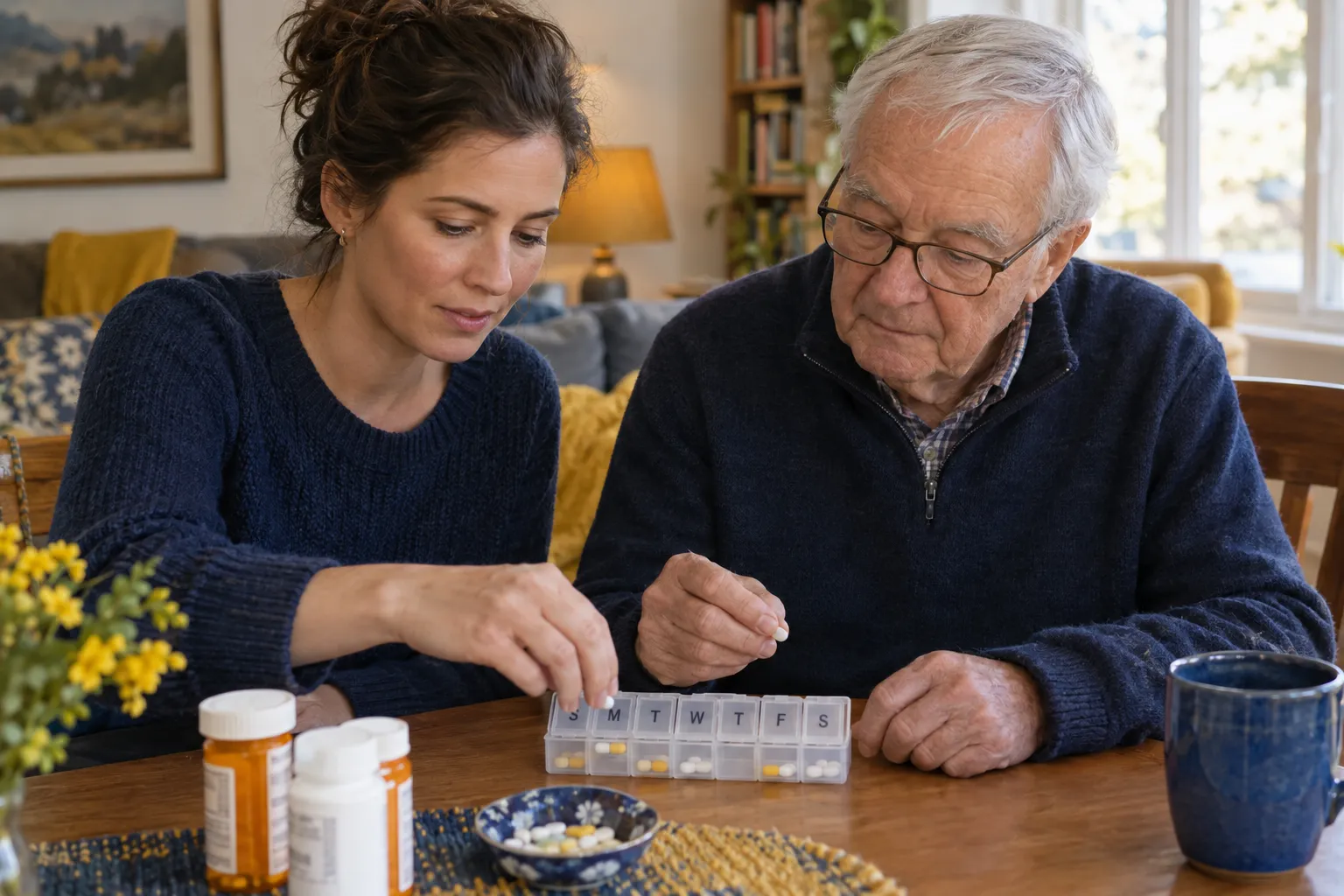
High blood pressure medicine works best when it's taken the way it was prescribed. That's hard when you feel fine. Pair it with something you already do every day, like brushing your teeth or making coffee.
- Use a weekly pill organizer.
- Set a daily reminder on your phone.
- Keep a list of every medicine and dose.
- Never stop or change a medicine without talking to your care team.

Appointments
Make short visits count.
Bring your home readings, your list of medicines, and your top three questions. Ask your biggest question first. Bring someone with you if that helps.